


Changing careers can feel like standing at the edge of a cliff. You know the leap is necessary, but the drop looks terrifying. What if you fail? What if you waste time? What if you end up needing a degree you do not have the money, patience, or energy to pursue?
Here is the good news: you can absolutely change careers without going back to school. The key is understanding yourself, your transferable skills, and the paths that actually fit you. I use tools like the Myers-Briggs Strong Interest Inventory to help my clients uncover those connections, but let me show you how it works in real life.
The Myth of “Starting Over”
Most people who come to me say, “I feel like I have to start over from scratch.” That belief alone keeps thousands of people stuck in jobs they have outgrown. But the truth is, you are not starting over. You are repackaging.
Think of it this way: you are like a house that has been remodeled. The foundation is strong. The walls are still there. You might be tearing out old carpet and adding fresh paint, but the value has not disappeared. It is only changing form.
Take Jenna, for example. She was a teacher for fifteen years and thought her only option outside of education was to go back for another degree. After walking her through her Strong Interest Inventory results, it became clear that she loved designing systems, teaching adults, and working in creative problem-solving environments. Instructional design and corporate training were natural fits. No new degree required. What changed was her perspective on what she already brought to the table.
Step One: Clarify What Energizes You
This is where assessments matter. The Strong Interest Inventory is based on decades of research and aligns your preferences with real career environments. It measures things like whether you thrive on people interaction or independent work, whether you are energized by analytical problem solving or creative expression, and whether structure or flexibility suits you best.
Here is a story.
Marcus worked in sales but was exhausted by constant quotas and high-pressure meetings. He assumed his only options were other sales roles. His Strong results showed high interests in investigative and conventional themes. Translation: he liked problem-solving, data, and structure. Suddenly, roles in supply chain planning, operations analysis, or even compliance made sense. His skills from sales (relationship building, managing data in CRMs, handling negotiations) were transferable, but his day-to-day tasks became aligned with what energized him.
The moment he realized he could stop forcing himself into an extroverted grind and lean into his strengths was a breakthrough.
Step Two: Identify Transferable Skills
Your career history is a goldmine. Too often, people dismiss their skills because they came from a different industry. But employers care less about where you used the skill and more about whether you can apply it to their environment.
Let me give you an example.
Sophie worked as a restaurant manager. She thought her only next step was another restaurant or hospitality role. But when we broke down her skills, the list was incredible:
-
Managing teams in a high-pressure environment
-
Handling budgets and cost control
-
Training and developing staff
-
Delivering strong customer experiences
-
Problem-solving on the fly
We reframed her experience toward operations management and HR. She landed a role in corporate employee engagement without ever stepping foot in a classroom again.
Step Three: Research Career Paths That Do Not Require New Degrees
Not every career path demands a graduate degree. Many paths reward certifications, short courses, or even just relevant experience.
Some examples where clients have made successful pivots:
-
Instructional Design / Learning and Development – great for teachers, trainers, or anyone who has led programs. Tools like Articulate Storyline or Captivate can be learned online.
-
Project Management – professionals from operations, construction, events, and healthcare move here easily. A PMP or CAPM certification can strengthen your case, but experience matters most.
-
Data Analytics – many people pivot here with free or low-cost programs like Google’s Data Analytics Certificate. Prior Excel or reporting experience is often enough to get started.
-
Human Resources and Talent Development – managers, coaches, and team leads transition smoothly. Certifications like SHRM-CP, PHR, or aPHR (Associate Professional in Human Resources) help but are not mandatory at the start.
-
Customer Success and Client Management – people from teaching, sales, or support backgrounds find this to be a natural fit.
The key is not to assume school is the answer. Instead, look for where you can bridge with certifications or even self-study.
Step Four: Test Before You Commit
Too many career changers burn out because they jump from one extreme to another. You do not need to quit your job tomorrow. You can test-drive careers.
-
Volunteer in the industry.
-
Take on freelance projects.
-
Shadow someone in the role.
-
Join professional associations or LinkedIn groups to see how insiders talk about the work.
For example, a client of mine named David thought he wanted to go into nonprofit fundraising. He started volunteering for a local nonprofit, managing a small donor campaign. Within three months, he realized the constant ask for money drained him. However, he loved organizing events and logistics. That pivoted him toward event management instead, where he has thrived ever since.
Testing prevents regrets.
Step Five: Reframe Your Story
This is where most people get stuck. You know what you want, but you are not sure how to convince an employer. This is why I use the Narrative Alignment Technique. It is about telling your career story in a way that highlights your past experience as the exact preparation for your new career.
For example:
“As a teacher, I spent ten years designing lessons, evaluating student outcomes, and adapting programs for different learning styles. These are the same skills required in instructional design, where the audience may be adults instead of children, but the goal remains the same: build learning that sticks.”
See how that turns a “different career” into “directly relevant”?
Why the Strong Inventory Works
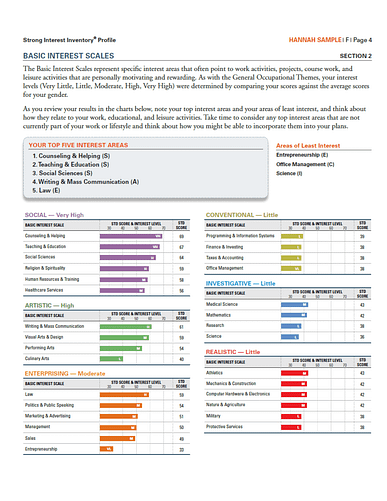
Here is where I weave in what makes the Strong Interest Inventory so powerful. It does not simply tell you what you can do. It shows you what will feel fulfilling in the long run.
I once worked with a client named Brian who had already been through two career changes. He had gone from finance to real estate to healthcare administration, each time thinking he had found “the one.” But he kept burning out. When we ran his Strong results, it became clear: he scored high in artistic and social themes. He craved creativity and collaboration. His past careers had offered money and stability but no creative outlet.
We mapped out paths in marketing and communications. Within a year, he was leading content strategy at a mid-size firm and finally felt like himself at work.
This is the difference between chasing what you think you “should” do versus aligning with what you are wired to enjoy.
The Mindset Shift: Permission to Pivot
One of the hardest parts about choosing a new career path is giving yourself permission to do it. Many people stay stuck because they feel guilty about “wasting” their degree, “throwing away” years of experience, or disappointing people who expect them to stay the course.
Let me be clear: nothing is wasted. Every single role has given you skills, resilience, and perspective that will serve you in the next chapter.
Think about Steve Jobs’ famous story of taking a calligraphy class on a whim. That one course influenced the typography of Apple products years later. You cannot always see how your experiences will connect, but they will.
Practical Tips to Start Now
Here are actions you can take this month if you are serious about changing careers without going back to school:
-
Take the Strong Interest Inventory. Start with clarity about your strengths, interests, and environments that fit you best.
-
List Your Transferable Skills. Write down everything you do daily that could apply elsewhere: leadership, budgeting, training, analysis, writing, customer service.
-
Research Career Paths. Use LinkedIn or the Bureau of Labor Statistics to see which careers match your profile and skills.
-
Join Networking Groups. Attend one virtual or in-person event in your target industry.
-
Update Your Resume and LinkedIn. Focus on relevance, not history. Lead with skills that match where you want to go.
-
Test the Waters. Try freelance or volunteer projects to confirm your interest.
-
Create a Transition Timeline. Map out steps you will take in 6, 12, and 18 months.

A Final Story
A client named Melissa came to me after twenty years in healthcare administration. She was burned out, stressed, and convinced she had to go back for a master’s degree to do anything new. Her Strong results showed high scores in enterprising and social themes. She loved leadership and building relationships.
Instead of more school, we reframed her into business development. Within six months she landed a role in healthcare tech sales, earning more money with far less stress. She did not start over. She simply shifted lanes.
That is the power of aligning with who you are instead of forcing yourself into who you think you should be.
Bridget’s Takeaway
Choosing a new career path without going back to school is not only possible, it is often the smartest move you can make. School is not the magic ticket. Clarity, strategy, and alignment are.
If you are ready to uncover which careers truly fit your interests and strengths, the Myers-Briggs Strong Interest Inventory is the perfect starting point. It gives you language, direction, and confidence to make a change without second-guessing every move.
Your next chapter is not about abandoning your past. It is about leveraging it into something that finally feels like you.
Bridget Batson, CMRW, CERM, CGRA, CPRW, NCOPE, CEIP is a Certified Master Resume Writer (CMRW), Certified Executive Resume Master (CERM), Certified Graphic Resume Architect (CGRA), Certified Professional Resume Writer (CPRW), Nationally Certified Online Profile Expert (NCOPE), Certified Employment Interview Professional (CEIP), Myers–Briggs STRONG® Administrator, Previous Fortune 500 Recruiter, and Owner of Houston Outplacement. Available for Individual Consultations at Houston Outplacement
 Connect with her on LinkedIn

