


How to Build Your Digital Footprint in 2025: A Complete Guide for Job Seekers and Professionals
Introduction: Why Your Digital Footprint Matters
In 2025, a resume is no longer the only tool employers use to evaluate you. Before reaching out, recruiters and hiring managers will often search your name online. What they find is your digital footprint — the collection of information, posts, and professional signals that represent you across the internet.
Your digital footprint is not just a LinkedIn profile. It includes articles you have written, comments you have made in professional communities, podcasts you have been a guest on, reviews you have left on industry tools, and even the photos or videos associated with your name. Together, these pieces create a picture of your credibility, expertise, and personality.
A strong digital footprint works as a career asset. It builds trust, showcases your knowledge, and makes it easier for employers to find you so your online presence for job search is very important. A weak or invisible footprint leaves recruiters guessing, while a careless one can raise red flags.
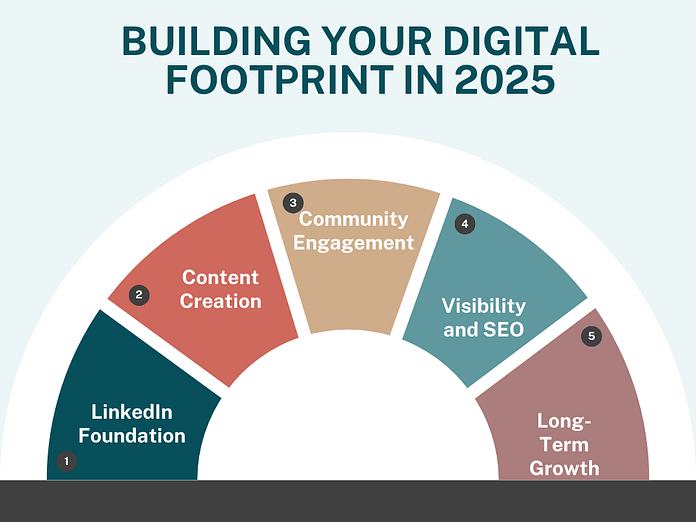
This guide breaks down five steps to building a powerful digital footprint in 2025. These steps are designed for job seekers, career changers, and professionals who want to stand out — not just on LinkedIn, but across the wider online world.
1. Build Your LinkedIn Foundation
For most professionals, LinkedIn is the anchor of a digital footprint. Employers expect to find you there, and it is often the first page that appears when your name is searched. A polished LinkedIn profile reassures recruiters that your career history is real and that you are active in your field.
Optimize Your Profile
-
Headline: Use a clear headline that includes your role and expertise. Instead of only writing “Project Manager,” try “Project Manager | Delivering Technology Upgrades and Process Improvements.”
-
Photo: Choose a professional headshot that feels approachable and confident.
-
About Section: Tell your career story in a short, engaging way. Highlight achievements and goals.
-
Experience Section: List positions with a few results-oriented bullet points. Recruiters skim here, so make it clear and concise.
-
Skills and Endorsements: Select skills that match the roles you want. These also influence LinkedIn’s search rankings.
Stay Active
Profiles are important, but activity is what keeps you visible.
-
Share one post per week to demonstrate your knowledge.
-
Comment on posts from leaders in your field.
-
Use LinkedIn Collaborative Articles to contribute your perspective.
-
Join professional groups and participate in discussions.
Think of LinkedIn as your digital headquarters. Everything else you do online should connect back to it.
2. Expand Through Content Creation
Content creation is how you move beyond a static profile and start building authority. It shows your ideas, not just your job titles. In 2025, content can take many forms, so you do not have to stick to traditional blogging.
Writing Options
-
Personal website or portfolio blog: A central place to showcase work, projects, and case studies.
-
Substack newsletters: Share regular insights in an email-based format. Substack is growing as a platform for professionals to build direct audiences.
-
Guest blogs: Contribute to industry sites, association newsletters, or well-known career blogs to gain exposure.
Media and Visibility Platforms
-
Qwoted.com and Featured.com: Platforms that connect you with journalists looking for expert commentary. Contributing here can land your quotes in news articles and trade publications.
-
YouTube: Record tutorials, industry explainers, or thought pieces. Even short, simple videos can highlight your expertise.
-
TikTok and Instagram Reels: Short videos can work for career advice, creative industries, or technical explainers. If video feels natural, these platforms can help you reach new audiences.
Visual and Presentation Content
-
Infographics: Turn your ideas into visuals using Canva.
-
Slide decks: Share short professional presentations on LinkedIn or Scribd/SlideShare.
-
Case studies: Post examples of your work, lessons learned, or before-and-after results.
How to Keep Content Manageable
-
Start small. One blog post or one short video a month is enough to build momentum.
-
Repurpose. A Substack article can be broken into LinkedIn posts, a slide deck, and a short video.
-
Choose formats that feel natural. If you dislike writing, record video. If video feels overwhelming, stick to short LinkedIn posts or infographics.
The goal is not to become an influencer. It is to provide consistent evidence of your expertise where employers or peers can see it.
3. Engage with Communities
A strong digital footprint is not built by broadcasting alone. Engagement shows you are approachable, collaborative, and invested in your field. Employers value professionals who are part of conversations, not just isolated voices.
Where to Engage
-
LinkedIn: Comment meaningfully on posts from others. Respond to comments on your own posts. Join groups in your industry.
-
Reddit: Participate in professional subreddits related to your field. Answer questions and share experiences.
-
Quora: Write detailed answers to common questions in your area of expertise.
-
Niche communities: Many industries have specialized forums, Slack groups, or Discord servers where professionals gather.
-
Professional associations: These often include member-only discussion boards or online events.
How to Engage Effectively
-
Add thoughtful comments that expand the conversation. Avoid “Great post” and instead explain why you agree or share an additional insight.
-
Share examples from your work that illustrate a point.
-
Ask good questions that invite dialogue.
-
Support others by offering feedback or resources.
Why It Matters
Community engagement builds relationships. When people see you consistently contributing, they remember you. Over time, this visibility can lead to job referrals, collaborations, and even media opportunities.
4. Improve Visibility with Simple SEO
Search engine optimization can sound technical, but for job seekers and professionals it comes down to a few simple practices. You want your name to be associated with the topics you want to be hired for.
Practical Steps
-
Use keywords from job descriptions: If you are targeting “financial analyst” roles, include those words in your LinkedIn headline, About section, and posts.
-
Publish under your name: Articles, blogs, and Substack newsletters tied to your name improve what shows up when someone searches you.
-
Cross-link your content: Add links between your website, Substack, LinkedIn, and portfolio. This helps search engines connect the dots.
-
Optimize your email signature: Include a link to your LinkedIn or portfolio in every email you send.
Monitoring Your Visibility
-
Google your name regularly to see what comes up.
-
Set a Google Alert for your name to track new mentions.
-
Ask a friend to search you in incognito mode and see what results they get.
Why Visibility Matters
When recruiters search for you, they are not only checking for red flags. They are also looking for reassurance that you are active, knowledgeable, and aligned with the roles they are filling. A clean, consistent digital footprint makes you easier to trust.
5. Commit to Long-Term Growth
A digital footprint is never finished. It is a living part of your career and evolves as your experience grows.
Keep Profiles Updated
-
Review your LinkedIn profile every quarter. Add new achievements or certifications.
-
Update your headshot if it is more than five years old.
-
Refresh your About section when your career goals shift.
Add to Your Portfolio
-
Post recent projects, presentations, or media mentions.
-
Keep an archive of case studies or articles that showcase your growth.
Experiment with New Platforms
-
Stay alert to new opportunities like Threads or other emerging professional networks.
-
Test formats such as audio posts, LinkedIn newsletters, or interactive webinars.
Think About Legacy
Long-term growth is not only about jobs today but also about building a professional identity that lasts. Create evergreen content, share lessons learned, and consider mentoring or speaking opportunities that can expand your authority.
Bridget’s Takeaway: Your Digital Footprint is Your Career Brand
Your digital footprint is one of the most valuable career tools you have in 2025. It is how employers, recruiters, and clients evaluate you before they meet you. A strong footprint gives you authority, visibility, and trustworthiness.
Start with LinkedIn, expand into content creation, engage in communities, focus on visibility, and commit to long-term growth. You do not need to do everything at once. Start small, be consistent, and let your digital footprint grow alongside your career.
FAQ: Building a Digital Footprint
Q: Do I need to be on every platform to have a strong digital footprint?
No. Start with LinkedIn and choose one or two additional platforms that fit your style. Consistency matters more than being everywhere.
Q: What if I do not like writing?
You can create short videos, record audio clips, or design simple infographics. The format matters less than sharing your expertise.
Q: How often should I post on LinkedIn?
Once a week is enough for most professionals. Focus on value, not volume.
Q: Is a personal website required?
Not required, but helpful. A simple portfolio site or blog adds credibility and gives you control over your professional image.
Q: How do I keep my digital footprint secure?
Check privacy settings regularly, use strong passwords, enable two-factor authentication, and Google your name to monitor what shows up.
Q: How long does it take to see results?
Building a footprint takes time. Most people start seeing increased visibility and opportunities after a few consistent months.
Bridget Batson, CMRW, CERM, CGRA, CPRW, NCOPE, CEIP is a Certified Master Resume Writer (CMRW), Certified Executive Resume Master (CERM), Certified Graphic Resume Architect (CGRA), Certified Professional Resume Writer (CPRW), Nationally Certified Online Profile Expert (NCOPE), Certified Employment Interview Professional (CEIP), Myers–Briggs STRONG® Administrator, Previous Fortune 500 Recruiter, and Owner of Houston Outplacement. Available for Individual Consultations at Houston Outplacement
 Connect with her on LinkedIn

