


Job interview tips can make or break your next big moment.
Imagine you’re in a job interview, and you say, ‘I’m a great problem-solver.’ Cool, but it’s like telling Tony Stark you’re a genius without building a suit in a cave.” This places the keyword upfront while maintaining your voice.
As an award-winning career coach, resume writer, LinkedIn branding expert, and interview coach, I’ve seen candidates light up the room when they back up their skills with real stories. Showing, not telling, is how you make hiring managers remember you. Let’s talk about why this matters and how you can nail it in your next interview.
Why Stories Win Over Statements
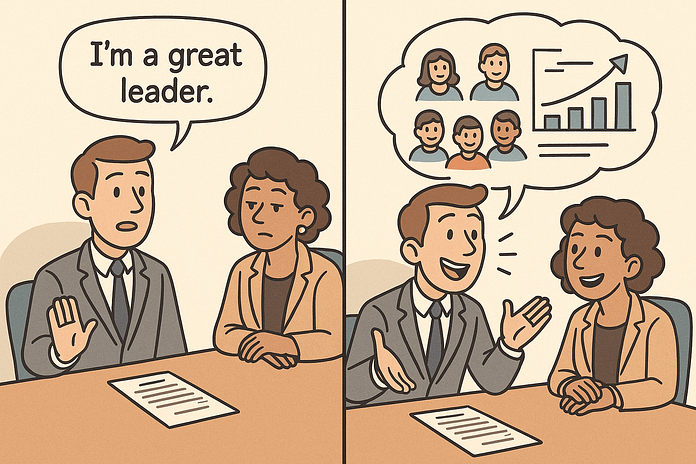
Saying “I’m a strong leader” is fine, but it’s like claiming you’re the next Beyoncé without dropping a single. Hiring managers hear big claims all day, and without proof, they just fade into the background. When you share a specific story about what you’ve done, it’s like hitting play on a highlight reel. It shows your skills in action, builds trust, and makes you stand out.
For example, I once coached a client interviewing for a project management role. Instead of saying, “I’m great at managing teams,” they shared, “I led a team of 10 to deliver a $500,000 project two weeks early by setting up daily check-ins and a shared task board.” That story stuck with the interviewer because it showed exactly how they got results. It’s the difference between saying you’re a superhero and showing up in your cape.
How to Show Your Skills Like a Pro
You don’t need to wing it in an interview. With a little prep and these job interview tips, you can walk in ready to shine.
I combine two approaches to help my clients do this: the STAR method (Situation, Task, Action, Result) and my Narrative Alignment Technique. Together, they’re like peanut butter and jelly: simple, effective, and better as a team. Here’s how you can make it work:
-
Dig Into the Job Description: Look for what the employer really cares about, the job core themes. These are your clues for what stories to tell.
-
Create a Story Bank with Narrative Alignment: Before the interview, jot down 8–10 stories from your past that match those job themes. Think of times you solved a problem, led a team, or improved something. Pick moments where you made a real impact, not just did your job. The trick? Make sure each story can flex to fit different questions, like a Swiss Army knife.
-
Shape Stories with STAR: For each story, break it down: Situation (what was going on), Task (what you had to do), Action (how you made it happen), and Result (what changed because of you). Keep it tight and practice it so it flows naturally. For example, a story about cutting costs by 20% could answer questions about leadership, creativity, or handling pressure, depending on how you frame it.
-
Practice, But Keep It Real: Run through your stories out loud so they feel like second nature. You want to sound like you’re sharing a memory, not reciting a script. Check that each story connects to the job and shows your impact clearly.
My (Bridget Batson’s) Narrative Alignment Technique takes STAR to the next level. Instead of scrambling for stories mid-interview, you’re prepped with a bank of tailored examples that fit the job like a glove. It’s like curating a playlist for a road trip. You’ve got the right vibe ready for any moment, so you’re not stuck fumbling with the radio.
Where People Trip Up
I’ve seen candidates get tongue-tied because they share stories that don’t quite fit or focus too much on the team instead of their own role. It’s like pitching a movie where you’re just an extra. To avoid this, ask yourself, “Does this story show what I did and why it matters to this job?” If it’s off, tweak it to highlight your contribution and tie it to the role.
Real-World Story: The Campaign Crunch
A few months back, I worked with Jamie, a marketing pro aiming for a big role at a fast-paced agency. During her interview, they hit her with, “How do you handle tight deadlines?” She could’ve said, “I’m cool under pressure,” and left it there. But thanks to our prep with Narrative Alignment, she had a story ready. She leaned in and said, “Last year, my team got a curveball—a social media campaign had to launch in a week to catch a trending hashtag. My job was to pull it all together. I rallied the design crew, got visuals locked in two days, and prioritized posts to hit the deadline. The result? We launched on time and saw the engagement jump 20%.” That wasn’t just an answer; it was a scene from her career movie, showing collaboration and results—exactly what the job description screamed for. She walked out knowing she’d played her cards right, like a pro at the poker table.
Read More: Negotiating about Salary
Wrapping It Up
Your interview is your chance to show hiring managers what you’re made of. By sharing stories that prove your skills, using STAR and Narrative Alignment, you’re not just another candidate. You’re the one they can’t forget. Take a little time to study the job, build your story bank, and practice telling your stories naturally. You’ve got this, and with a bit of prep, you’ll walk in ready to show them you’re the real deal.

Bridget Batson, CMRW, CERM, CGRA, CPRW, NCOPE, CEIP is a Certified Master Resume Writer (CMRW), Certified Executive Resume Master (CERM), Certified Graphic Resume Architect (CGRA), Certified Professional Resume Writer (CPRW), Nationally Certified Online Profile Expert (NCOPE), Certified Employment Interview Professional (CEIP), Myers–Briggs STRONG® Administrator, and Owner of Houston Outplacement. Available for Individual Consultations at Houston Outplacement
 Connect and Follow Bridget on LinkedIn

